Wisconsin Wildflower Weddings
When it comes to wedding flowers, some people love the classics—roses, babies breath, eucalyptus.
And we get it. These flowers are timeless, gorgeous, and familiar.
But before you go any further, we invite you to read our Why We Love Weeds blog…and then come back here.
Because what we offer is something a little different (well actually a lot different) from the typical wedding floral industry.
We are local florists.
We work in accordance with nature, not against it.
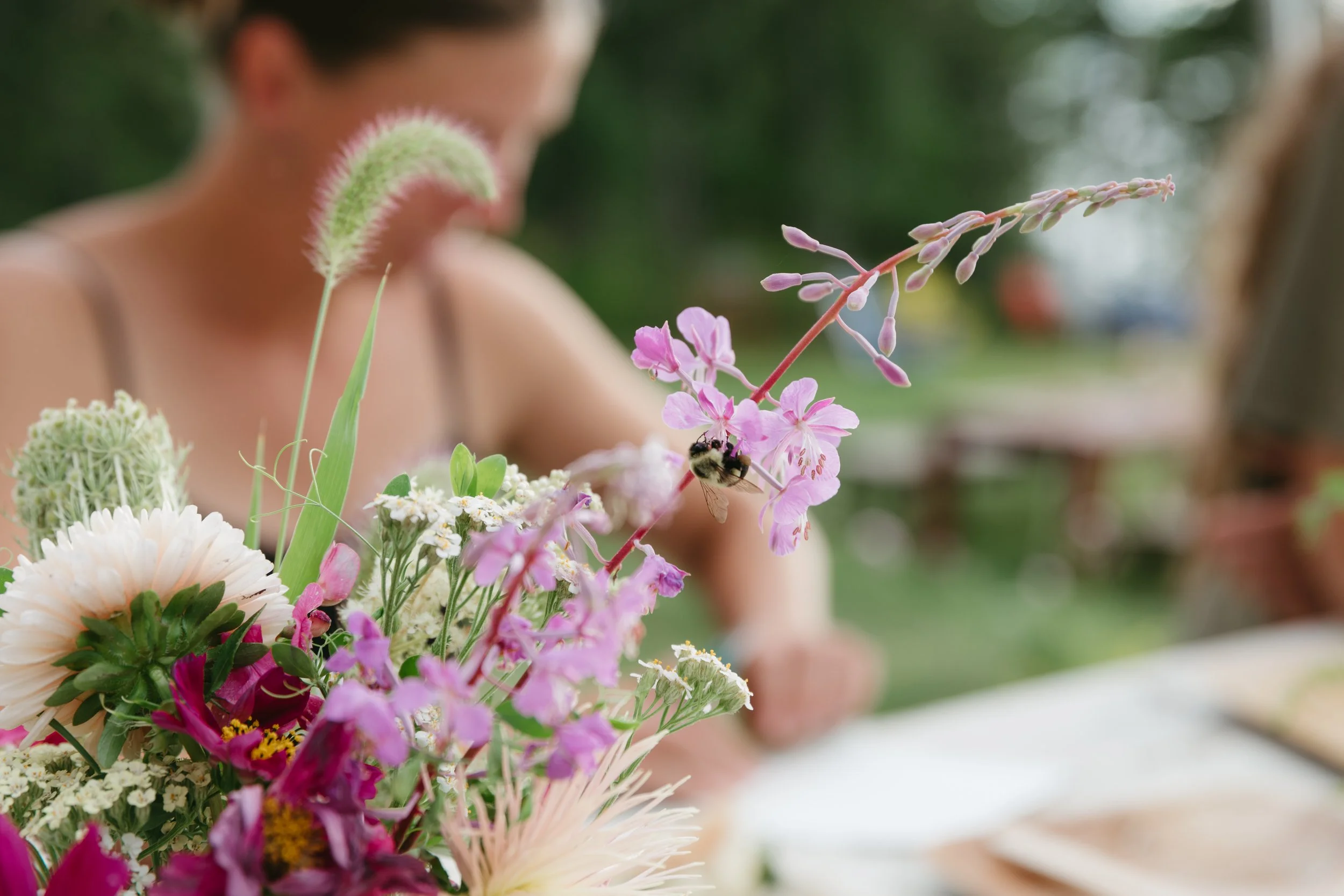
Our flowers don’t get shipped in from across the world—they come from right here in Wisconsin.
Whether they’re grown by us or responsibly foraged from our local native prairie, everything we use is in-season and growing just as nature intended.
Plan Around the Bloom
Want to plan your wedding around when your favorite flowers are blooming?
Of course you do.
Each season brings a host of new beauties, and there is something deeply special about aligning your wedding with the natural rhythms of the land. When your bouquet mirrors what’s happening in the natural world around you, it just feels right.
There’s a quiet beauty in appreciating what nature freely and abundantly provides.
Choosing a Bouquet Style
Before we get into specific flowers, it helps to think about bouquet shape—how it feels in your hands, how it moves, the space it takes up.
Round
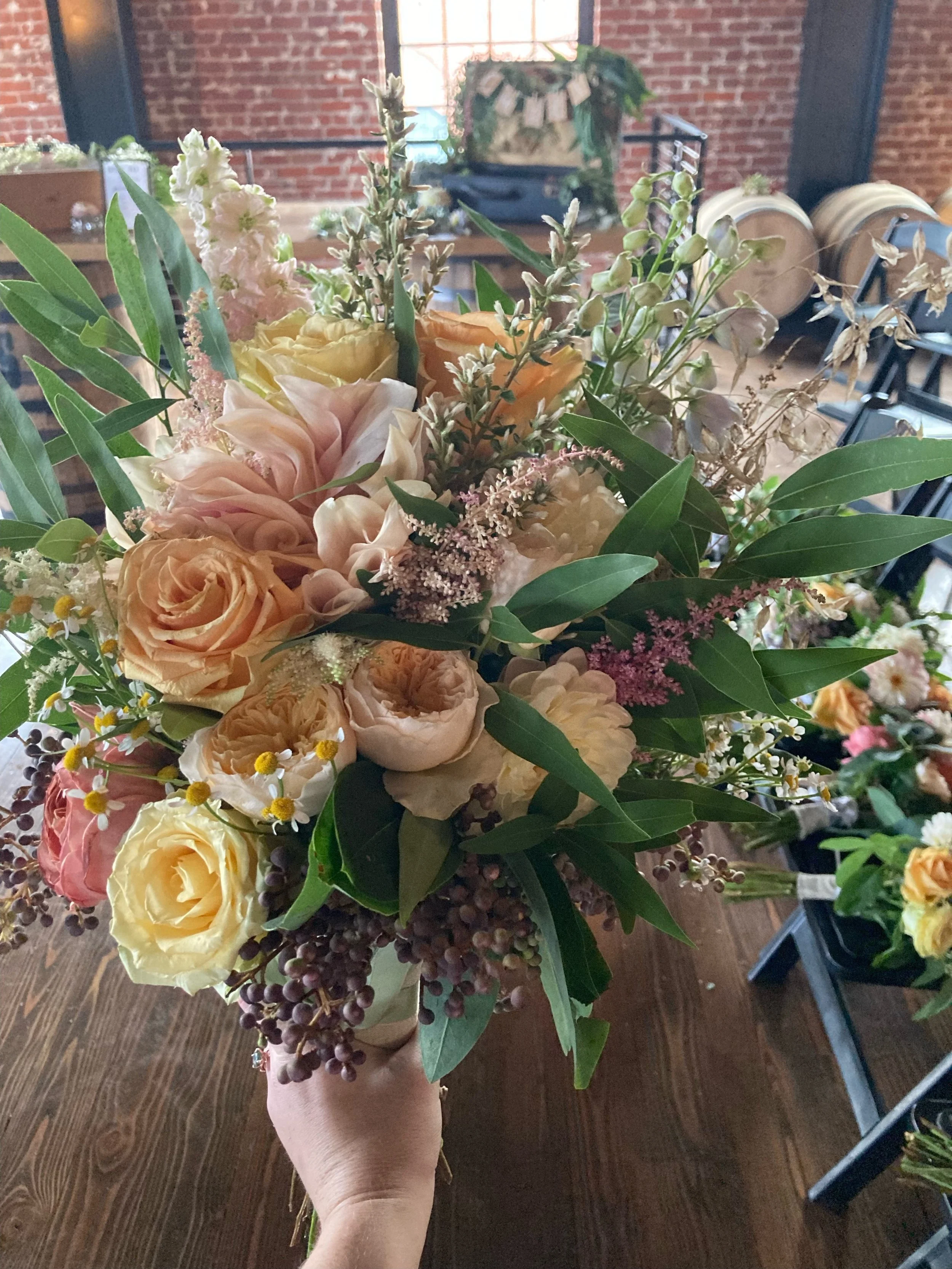
Dense and tightly gathered, with a variety of flowers and greenery. Think zinnias, tulips, peonies, sedum—flowers with big, sturdy heads that nestle together beautifully. These bouquets feel abundant, full, and classic.
Cascading
A bouquet with movement. A rounded top that gently spills downward with trailing elements. Amaranth is a favorite here, along with softer, droopier greenery like flowering asparagus. Romantic, a little wild, and super flowy.
Wild
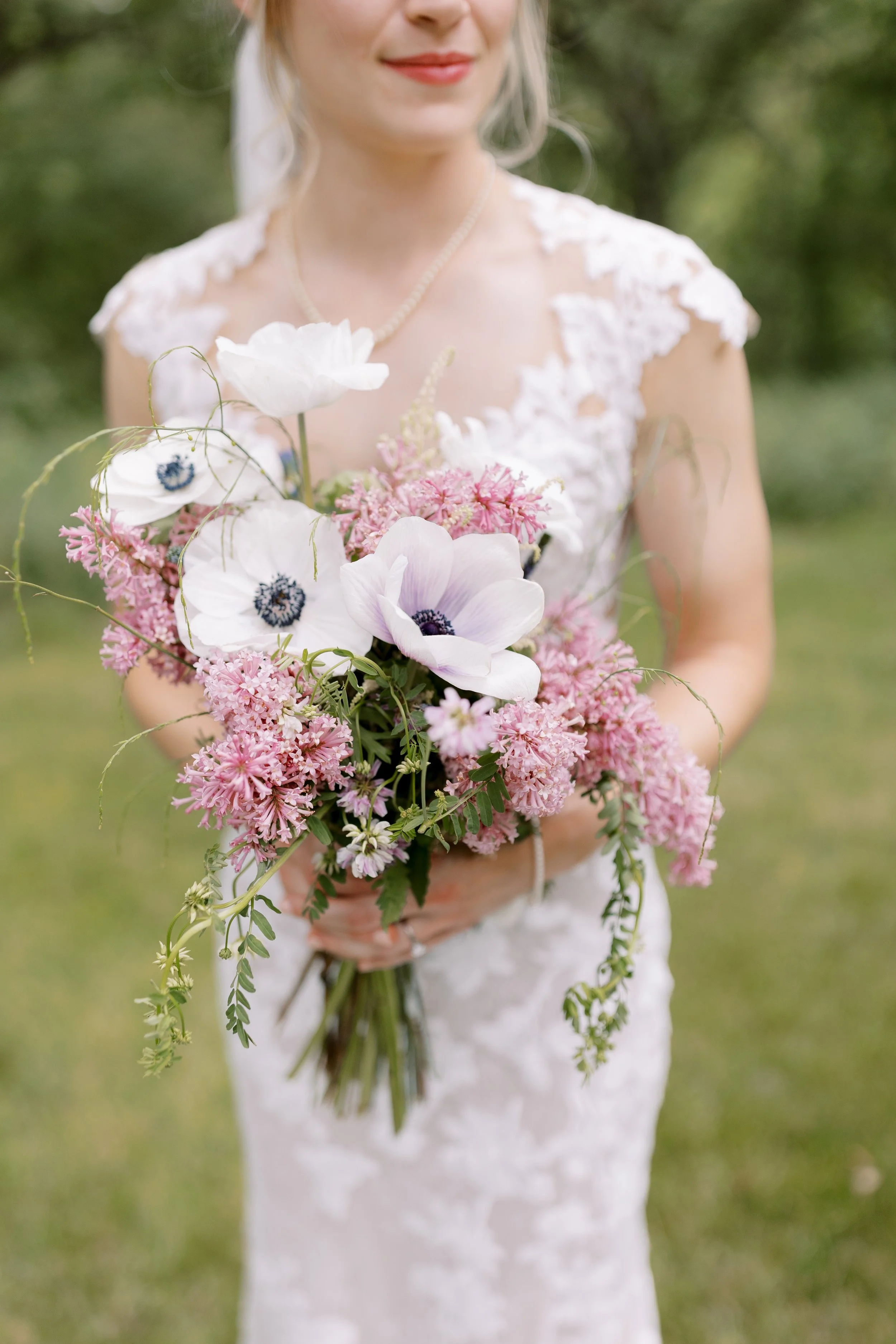
Light and airy, with plenty of wiggle room. Smaller, more delicate flowers shine here. Forget-me-nots, vervain, sneezewort, queen anne’s lace. These bouquets feel as though they were gathered by hand on a slow walk through a field.
Seasonal Flowers That We Grow and Forage
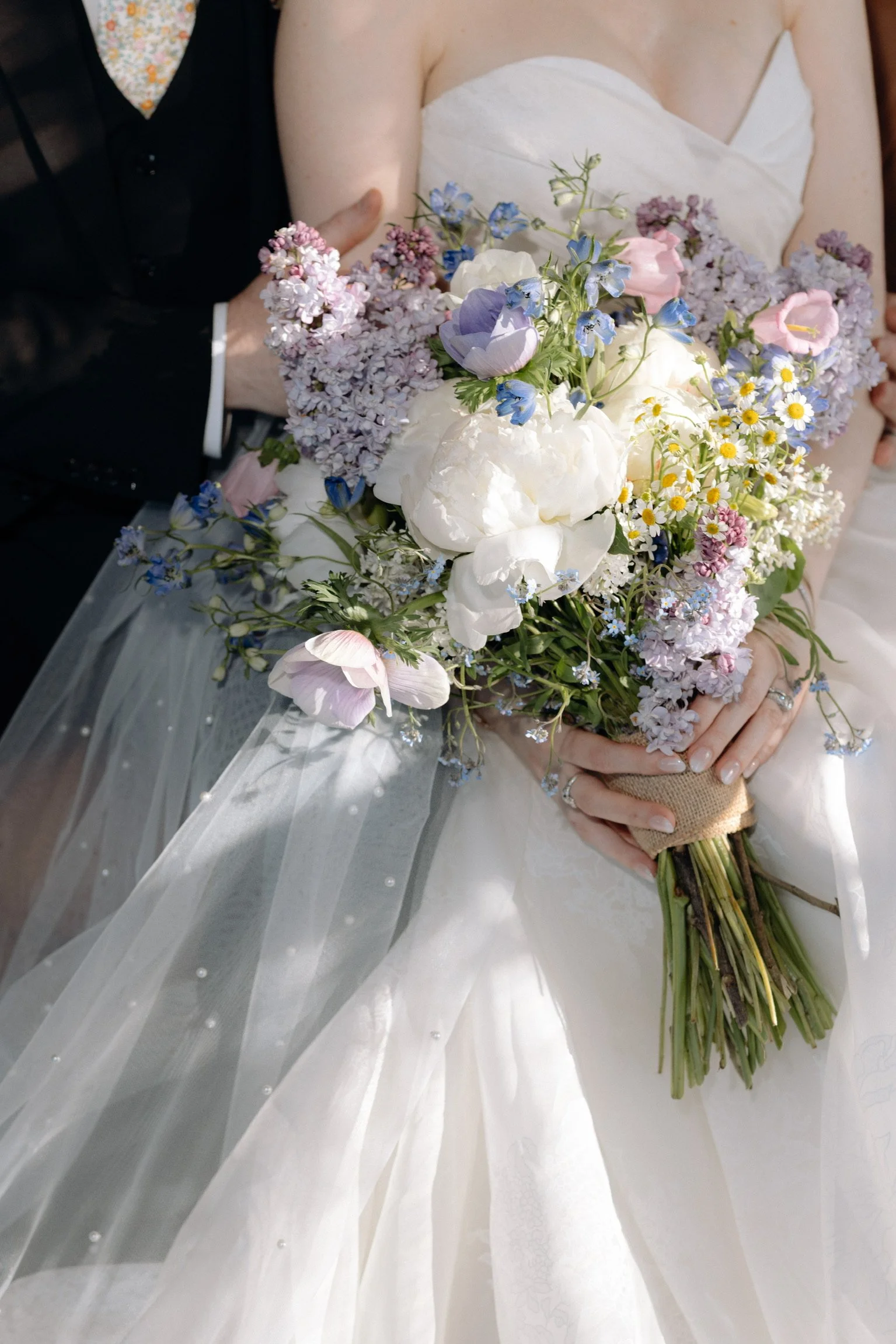
Because we work seasonally, the flowers available depend on your wedding date. Each season brings its own textures, colors, fragrances, and feelings.
Late Spring to Early Summer (May and June)
This is the soft, romantic season.
Lilacs
Peonies
Tulips
Daffodils
Lily of the Valley
Columbine
Lupine
Meadow Rue
Forsythia
Daisies
Yarrow
Dames Rocket
Eastern Bluestar
Anemone
Mullein
Tree Blossoms (Dogwood, Crabapple)
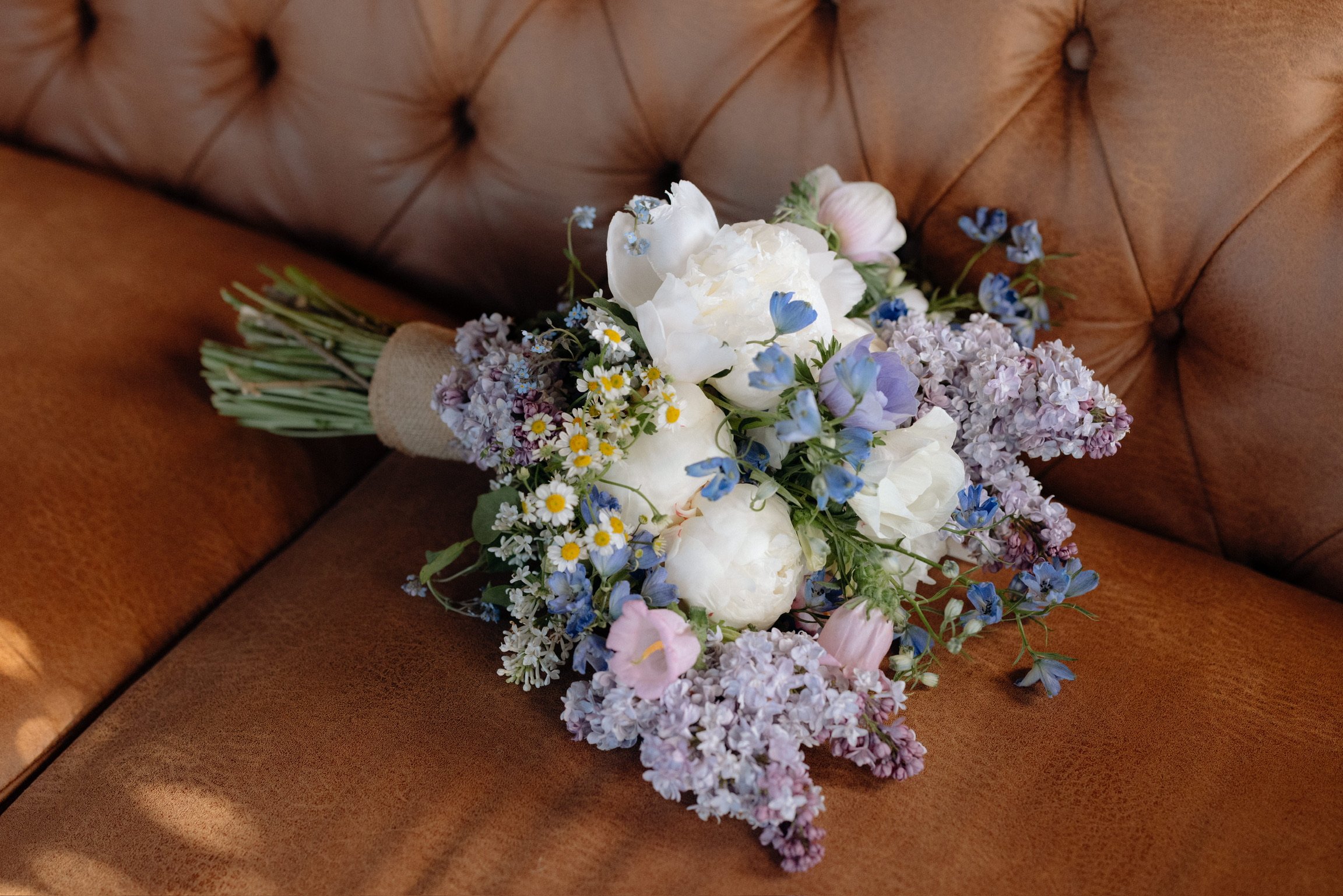
The colors lean gentle…pinks, whites, blues, yellows, purple. Tulips and peonies, with their large blooms, are perfect for full, round bouquets. Meanwhile, delicate, dainty flowers like lily of the valley and forget-me-nots bring an airy feeling and are perfect for wild bouquets!
We especially love incorporating flowering branches this time of year. They add shape, movement, and an unmistakable feeling of spring!
Mid Summer (July and August)
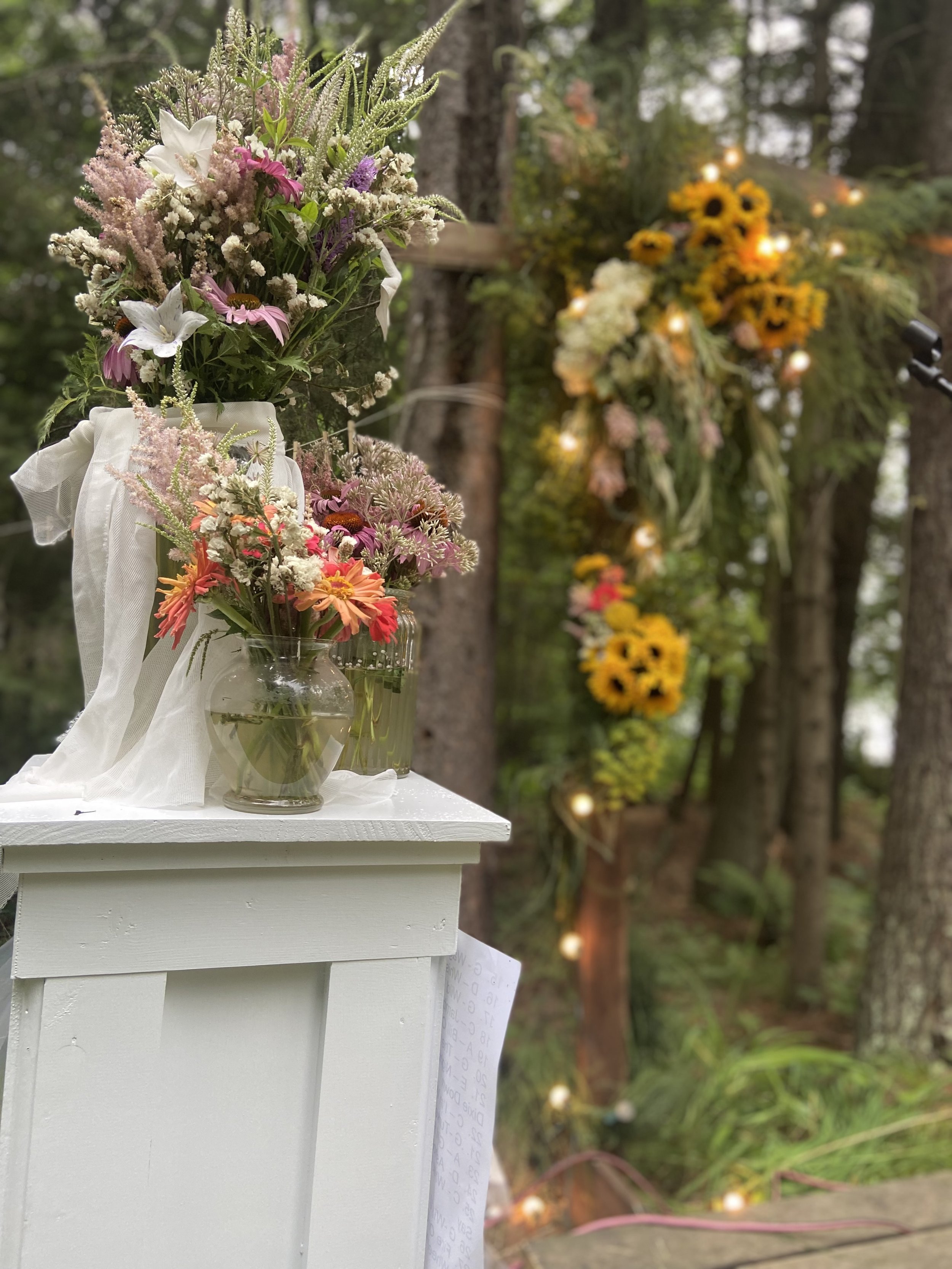
This is the season of abundance…when the full rainbow of color opens up!
Black Eyed Susans
Joe Pye Weed
Queen Anne's Lace
Culvers Root
Echinacea
Butterfly Weed
Phlox
Flowering Spurge
Flowering Asparagus
Bee Balm
Vervain
Zinnias
Sunflowers
Strawflowers
Amaranth
Wormwood
Herbs (Lemon Balm, Tulsi, Basil, Fennel, Dill, Apple Mint, Peppermint)
Yarrow
Sneezewort
Sneezeweed
Baptisia flowers & leaves
Vegetables!
If you love the look of Eucalyptus, baptisia leaves (also known as false indigo) are our favorite alternative. They are so lush and beautiful.
We also love working with herbs (think lemon balm, tulsi, basil, fennel, dill, apple mint, peppermint.) They add texture, softness, and the most incredible scent. A bouquet that looks beautiful and smells so fresh.
And for those drawn to something a little more unexpected…we can incorporate vegetables!
Yes, vegetables.
Ever seen cabbage tucked into a bouquet? Or tomatoes still on the vine hanging alongside amaranth? In the height of summer, when the land is overflowing, locally grown produce adds a surprisingly beautiful and unique touch to arrangements.
Late Summer to Early Fall (September and October)
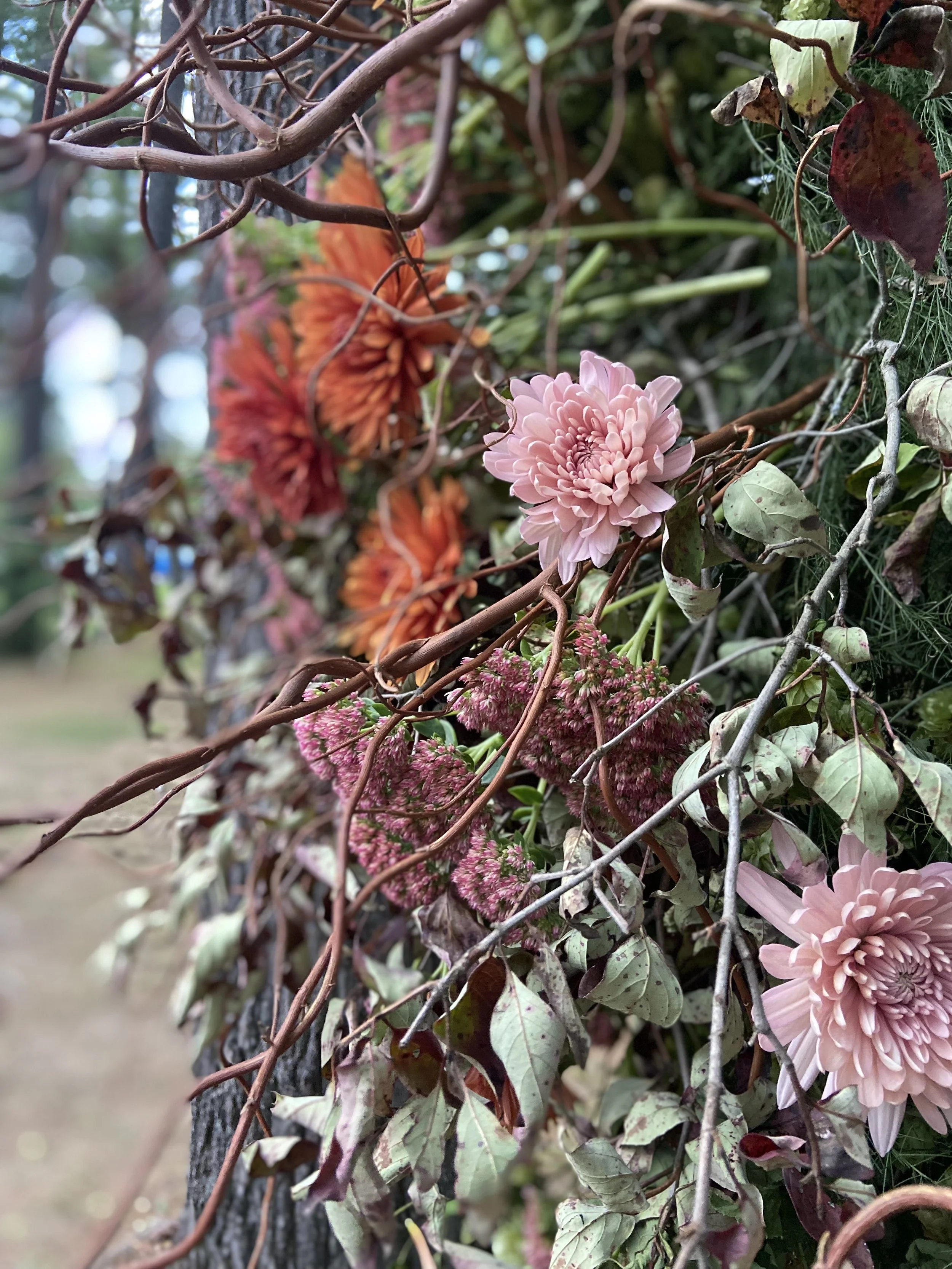
This is the season of warmth and transition. There are so many vibrant, warm colors in the changing leaves, browning grasses, and last flowers of the year.
Sunflowers
Zinnias
Amaranth
Strawflowers
Queen Anne's Lace
Black Cohosh
Asters (aromatic, calico, smooth blue)
Obedient Plant
Sedum
Hydrangea
Dried grasses
Tree branches with leaves mid-color change (oak, maple, aspen)
We love leaning into the feelings of change this time of year.
Have you considered incorporating seed pods into your bouquet? The shapes and textures of wildflower seed pods add a grounded, wild element. It fully represents and highlights the natural beauty of the season.
Beyond Bouquets
While bouquets are often the centerpiece, flowers can be woven throughout your entire day.
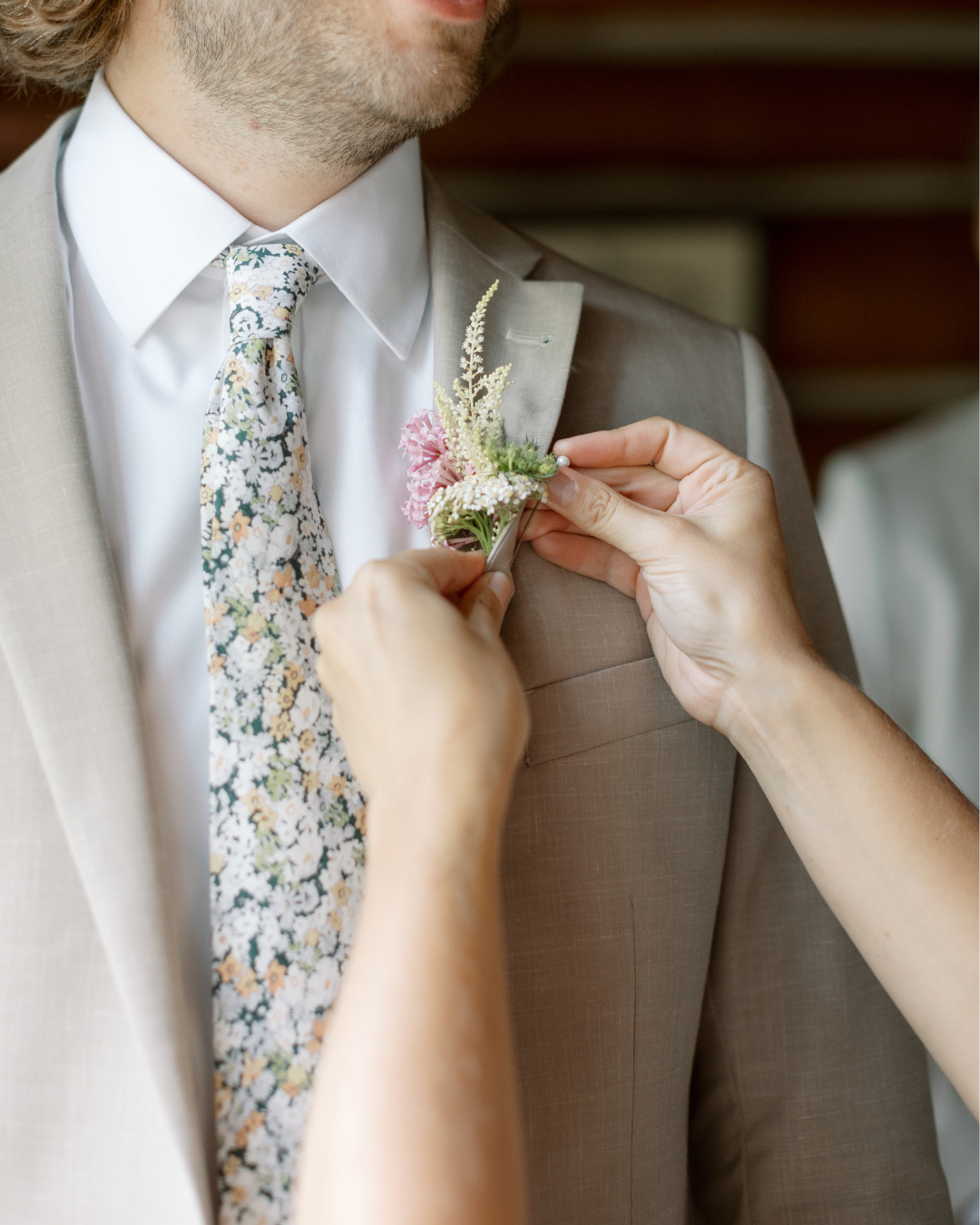
Boutonnières and flower crowns add small, meaningful touches. Petals for flower girls add the sweetest touch.
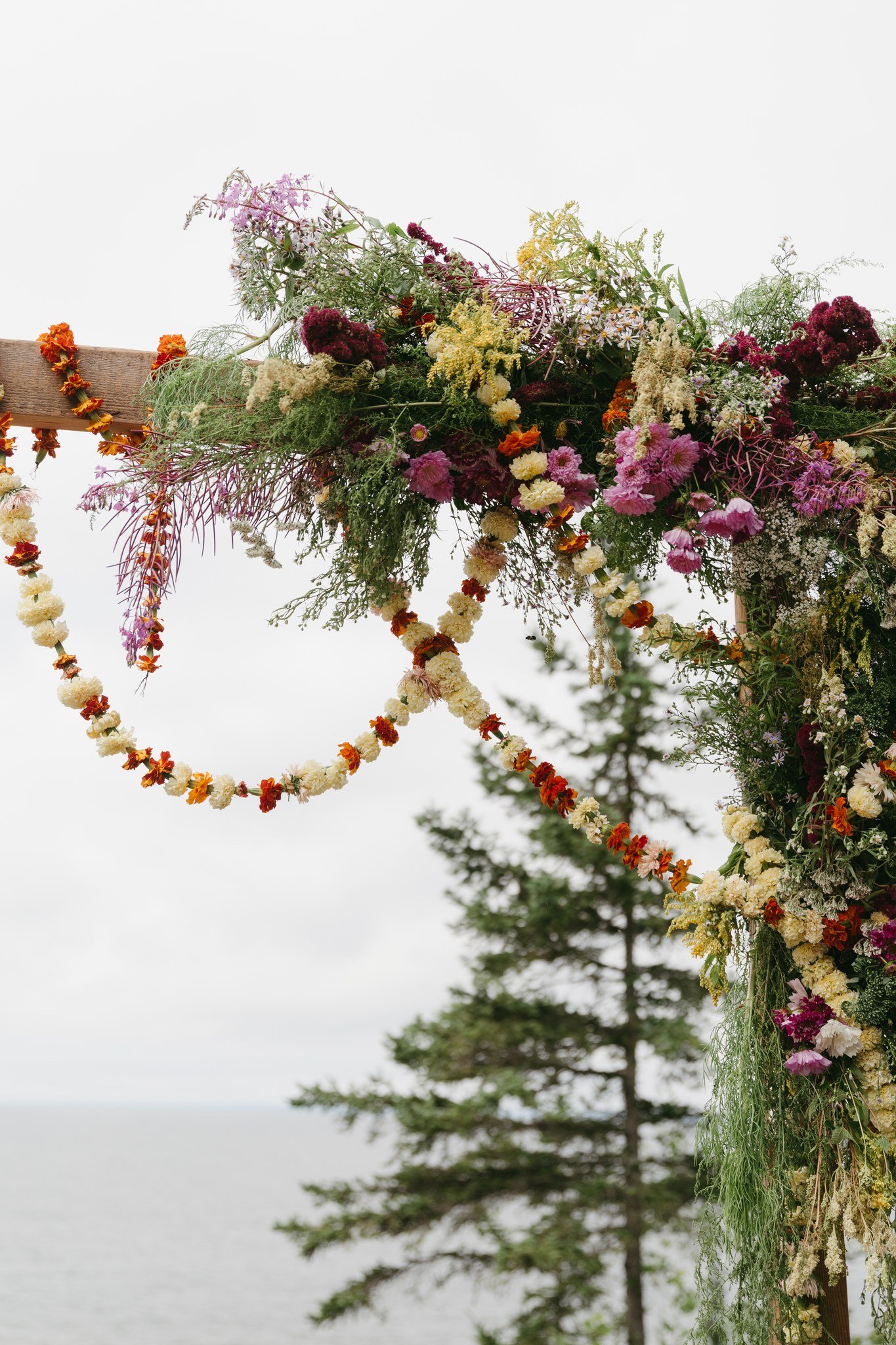
We can also design larger elements, like archway arrangements or flowers tucked around signs and displays.
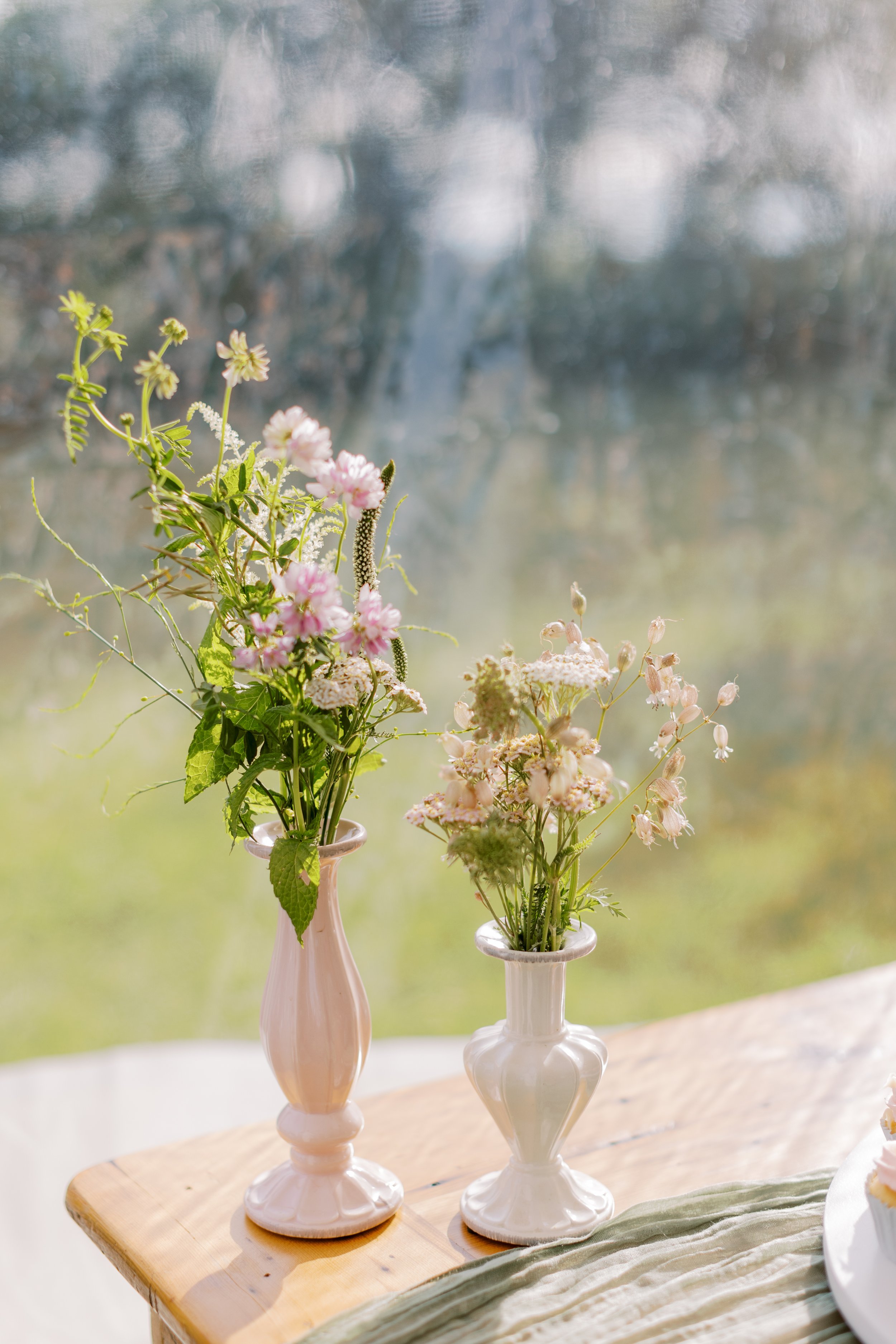
And for your reception, we can create simple, seasonal arrangements in bud vases for table centerpieces and more.
Let’s Dream Something Up Together
At the end of the day, a Wisconsin wildflower wedding isn’t about recreating something you’ve seen before.
It’s about creating something unique and that fully reflects you, the season, and the land around us.
If you have ideas, inspirations, or even just a feeling you’re trying to capture, we would love to hear it! We’re always happy to explore what’s possible, offer guidance, and help bring your vision to life in a way that honors both you and the land.
We love everything about weddings and we would be honored to bring some natural beauty into your special day.
<3 Ella & Rosie